
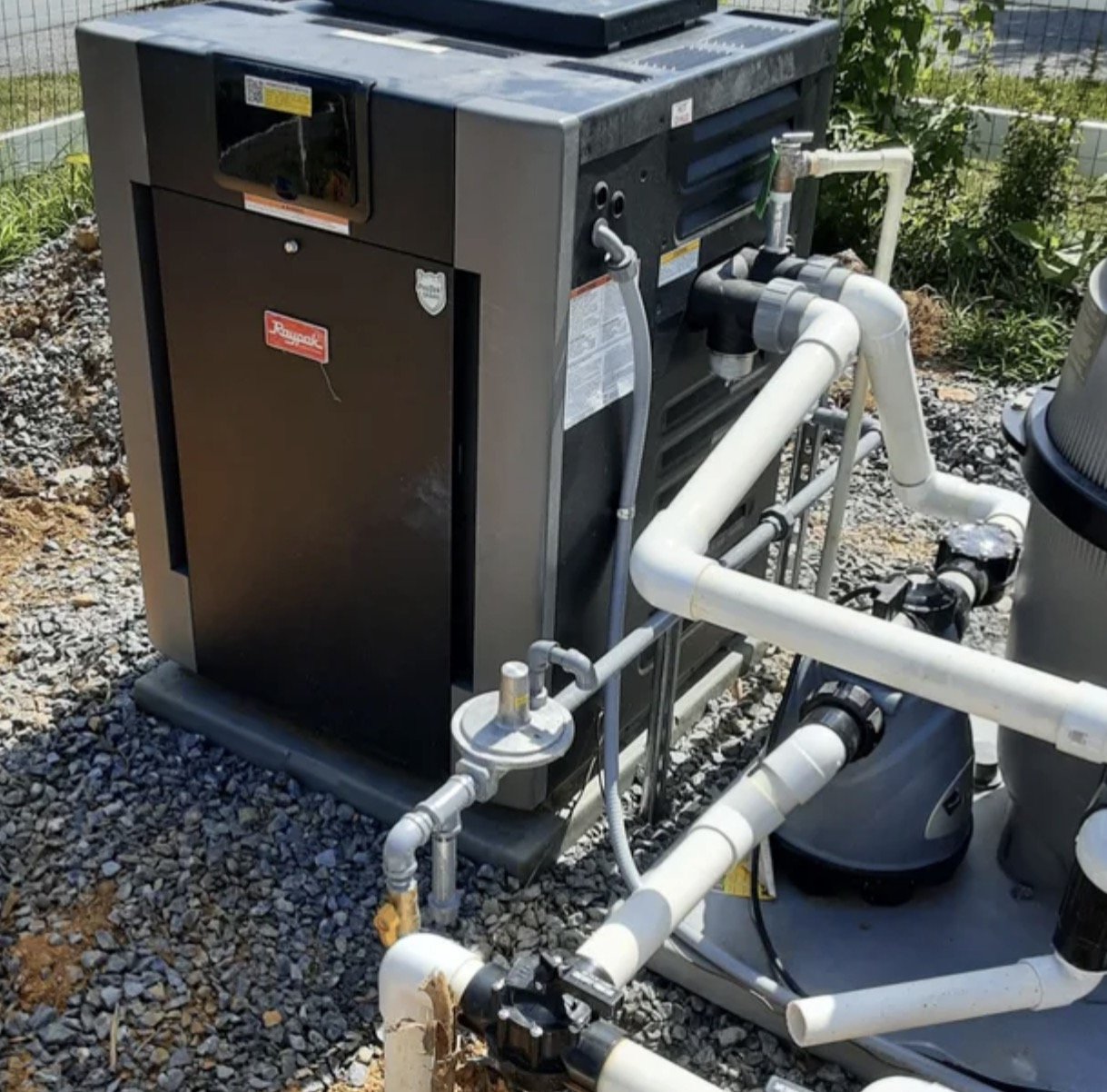
This comes up in almost every heater conversation we have: should you go with a heat pump or a gas heater? The honest answer is that it depends on what you're optimizing for, and anyone giving you a flat "heat pumps are always cheaper" or "gas is always better" answer is oversimplifying a decision that actually has real tradeoffs on both sides.
How a Gas Heater Works
A gas heater burns natural gas or propane to generate heat directly, then transfers that heat into your pool water as it circulates through the heater. It's a direct, high-output process — which is exactly why gas heaters are known for heating water quickly, even from cold.
How a Heat Pump Works
A heat pump doesn't generate heat directly. It uses a refrigeration cycle to pull existing heat out of the surrounding outdoor air and transfer it into your pool water — the same basic principle as an air conditioner, running in reverse. Moving heat that's already present in the air takes meaningfully less energy than generating heat from combustion or electrical resistance, which is where a heat pump's efficiency advantage comes from.
Heating Speed
This is one of the clearest, least debatable differences: gas heaters generally heat water faster than heat pumps. If you're bringing a pool up to temperature from cold — say, at the start of the season, or ahead of a specific event — a gas heater typically gets you there in less time. Heat pumps are better suited to maintaining a set temperature over time than rapidly closing a large temperature gap.
Energy Source and Operating Considerations
Gas heaters run on natural gas or propane; heat pumps run on electricity. Which is cheaper to operate depends on your local utility rates for each, how long you run the heater, your target temperature, and your pool's size and exposure — not on the technology alone. Raypak publishes COP (Coefficient of Performance) ratings for its Crosswind heat pump line in the 5.3 to 6.1 range, reflecting how many units of heat the system is rated to move per unit of electricity consumed under specific test conditions. That's a meaningfully favorable efficiency ratio, but it doesn't automatically translate into lower total operating cost for every homeowner — your actual electricity rate compared to your gas rate is just as important a variable.
Why Air Temperature Matters
Because a heat pump draws heat from outdoor air, its efficiency changes with outdoor conditions — it works harder, and less efficiently, as air temperature drops. Gas heaters aren't dependent on outdoor air temperature in the same way, since they generate heat directly rather than extracting it from the surrounding environment. For most of a North Texas swim season, this difference is manageable; it becomes more relevant if you're trying to extend swimming into the coldest weeks of winter.
When a Heat Pump Tends to Make Sense
If your priority is maintaining a comfortable, consistent water temperature across a long swim season without watching your gas usage climb, a heat pump's operating profile generally fits that goal well — particularly paired with a pool you use regularly rather than sporadically.
When a Gas Heater Tends to Make Sense
If you need fast heat-up on demand — hosting an event, opening the pool for a specific weekend, or heating infrequently rather than maintaining a steady temperature — a gas heater's speed advantage tends to matter more than a heat pump's efficiency advantage.
There's No Universally "Best" Option
Some homeowners split the difference with a hybrid setup — a heat pump for efficient day-to-day maintenance and a gas heater on standby for rapid heat-up when needed. Raypak specifically publishes guidance on hybrid heating configurations for exactly this reason. The right answer for your pool comes down to how you actually use it, your local utility rates, and how much you value speed versus efficiency — not a universal rule either technology's marketing wants you to accept.
Frequently Asked Questions
Is a heat pump always cheaper to run than a gas heater?+
No, and treat any claim that says otherwise with suspicion. Heat pumps are generally more efficient at converting energy into pool heat, but 'more efficient' doesn't automatically mean 'cheaper' once you factor in your local electricity rate versus gas rate, how fast you need the pool heated, and your climate. The honest answer is that operating cost depends on your specific situation, not a universal rule.
Which heats a pool faster, a heat pump or a gas heater?+
Gas heaters generally raise water temperature faster than heat pumps. If you need to heat a cold pool quickly — for a weekend event, for example — a gas heater typically gets you there sooner.
Does cold weather affect heat pump performance?+
Yes. A heat pump pulls heat from the surrounding outdoor air, so its efficiency drops as outdoor air temperature drops. This matters less across a typical North Texas swim season than it would in a colder climate, but it's still a real factor if you're hoping to swim through the coldest weeks of winter.
Can I install both a heat pump and a gas heater?+
Yes — some homeowners run a hybrid setup, using a heat pump for efficient day-to-day temperature maintenance and a gas heater for quick heat-up when needed. Raypak specifically publishes information on hybrid heating configurations that combine the two technologies.
What is COP and how does it relate to this comparison?+
COP (Coefficient of Performance) is a rating manufacturers use for heat pumps, measuring heat output against electrical energy input. Raypak's published COP ratings for its Crosswind heat pump line range from roughly 5.3 to 6.1 depending on the model — meaning the unit is rated to move several units of heat energy for every one unit of electricity it consumes, under specific test conditions. Gas heaters don't use a COP rating since they work on a fundamentally different principle.
Is there a universally 'best' pool heater?+
No. The right choice depends on how fast you need heat, your local gas and electricity rates, your climate, your budget, and whether you're prioritizing operating cost or heat-up speed. We can walk through those tradeoffs for your specific pool rather than defaulting to a one-size-fits-all recommendation.