
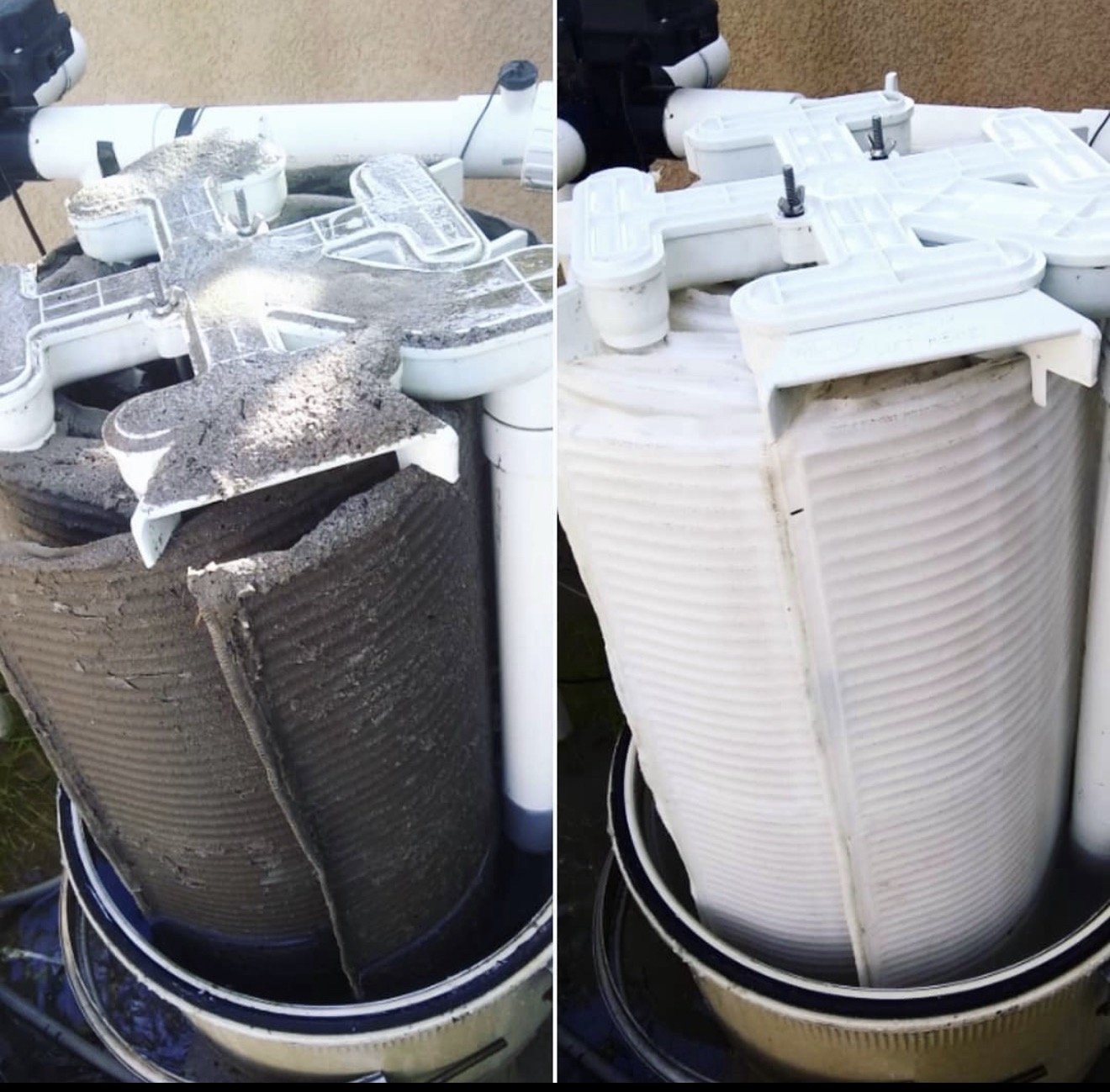
Your pool filter removes dirt, debris, oils, and other contaminants from the water. It's easy to take for granted, since it just quietly does its job in the background — but over time, that buildup restricts water flow and puts unnecessary strain on the rest of your equipment. A neglected filter doesn't just mean slightly cloudier water; it can affect your entire circulation system.
How Often Should a Pool Filter Be Cleaned?
The right schedule depends on the type of filter you have and how much your pool is used, but as a general rule:
- Cartridge filters: Clean about 2–4 times per year.
- DE filters: Typically need cleaning 2–3 times per year, along with routine DE maintenance.
- Sand filters: Usually need backwashing as needed, plus a deeper cleaning periodically.
Pools with heavy debris, lots of swimmers, or nearby trees may need more frequent maintenance than that general guideline suggests.
Filter pressure is another important indicator worth watching regardless of filter type. If your pressure gauge is consistently running significantly higher than its normal clean-filter pressure, that's a sign the filter is dirty and restricting flow — worth addressing before it gets worse.
What Happens If You Never Clean Your Filter?
A dirty filter doesn't just affect water clarity. It affects the entire circulation system:
- Reduced water flow. As the filter clogs, less water can move through the system, making it harder for your pool to circulate chemicals and stay clean.
- Higher filter pressure. Debris buildup restricts flow and causes pressure inside the filter tank to increase.
- Extra strain on the pump. Your pump has to work harder to push water through a restricted filter, which can contribute to unnecessary wear and higher operating costs over time.
- Poorer water quality. Reduced circulation means chemicals aren't distributed as effectively, which can contribute to cloudy water and other water-quality problems.
What Does a Professional Filter Clean Include?
A proper filter clean is more than spraying the filter elements off with a hose. During a professional filter cleaning, we:
- Remove and thoroughly clean the filter elements
- Inspect the filter elements for damage or excessive wear
- Inspect internal components and the filter tank
- Check O-rings and seals and replace them when needed
- Clean the filter housing and internal components
- Reassemble the filter properly
- Verify the system is operating correctly and check the filter pressure
Frequently Asked Questions
How often should I clean my cartridge filter?+
As a general rule, cartridge filters should be cleaned about 2 to 4 times per year. Pools with heavy debris, lots of swimmers, or nearby trees may need more frequent cleaning.
How do I know if my filter needs cleaning?+
Filter pressure is the clearest indicator. If your pressure gauge is running significantly higher than its normal clean-filter pressure, that's a sign the filter is dirty and restricting flow.
What's the difference between backwashing and cleaning a sand filter?+
Backwashing reverses water flow to flush built-up debris out of the sand and is done as needed. A deeper cleaning of the filter and its internal components is still needed periodically on top of routine backwashing.
Can a dirty filter affect my pool chemicals?+
Yes — reduced circulation from a clogged filter means chemicals aren't distributed as effectively through the water, which can contribute to cloudy water and other water-quality problems.
Does a dirty filter really put strain on my pump?+
Yes. Your pump has to work harder to push water through a restricted filter, and over time that extra strain can contribute to unnecessary wear and higher operating costs.
Can I clean my own filter, or should I hire someone?+
You can rinse cartridge elements yourself between professional cleanings, but a full filter clean also includes inspecting elements for damage, checking O-rings and seals, and verifying the system is operating correctly afterward — details that are easy to miss without experience.